
Technology-Enhanced Lesson
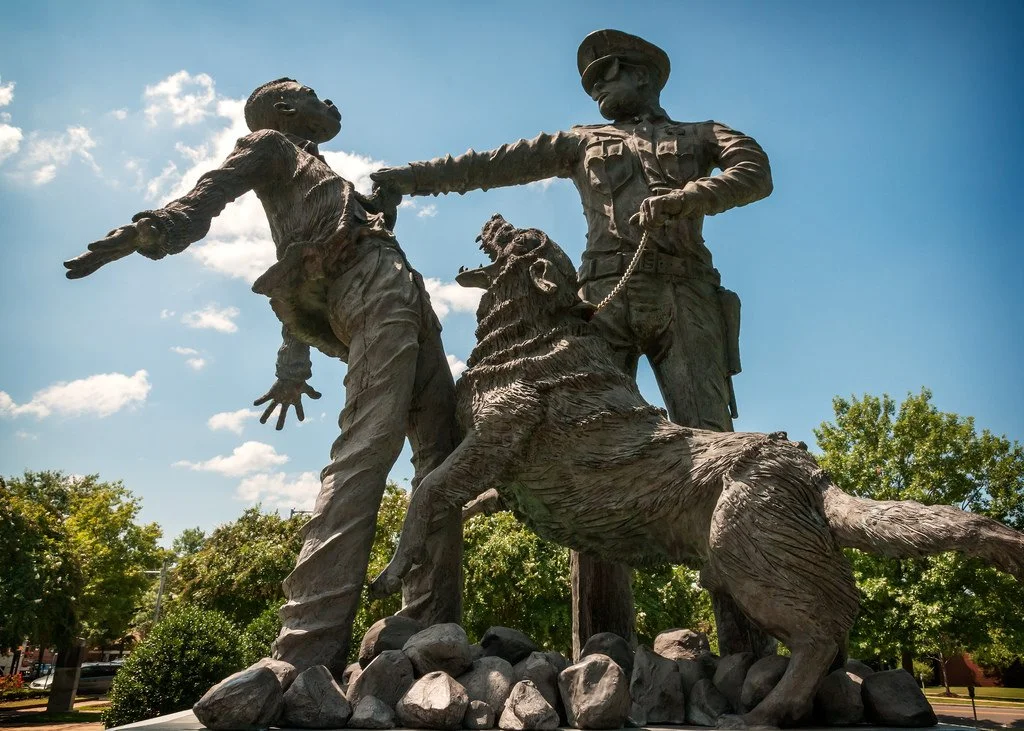
Birmingham Foot Soldiers sculpture, Kelly Ingram Park, Birmingham, Alabama. The sculpture serves as a visual inquiry prompt in this lesson.
Lesson Overview
I developed a technology-enhanced lesson for an 11th Grade History examining the Civil Rights Movement. Students were tasked with researching an influential Civil Rights leader, evaluating historical sources, and collaborating to create a Claim–Evidence–Significance response using Padlet.
The lesson incorporated the TPACK framework by combining historical content, inquiry-based instruction, and technology to support collaborative learning. It also incorporated Universal Design for Learning (UDL) strategies to accommodate students with different learning needs.
Simulated Student Trial: Findings
I used AI to simulate four different student perspectives, including a typical learner, an advanced learner, an English language learner, and a student with an IEP. The purpose was to identify potential problems before implementing the lesson in an actual classroom.
What Worked
The simulated trial suggested that students would benefit from researching real historical figures and using digital resources to investigate their significance. Padlet provided an opportunity for students to collaborate, share their findings, and learn from other groups.
The advanced learner could benefit from opportunities to investigate historical events more deeply, while teacher modeling and structured activities provided a foundation for students who needed additional guidance.
What Didn't Work
The biggest problem was time. I originally designed the lesson to take approximately 25 minutes, but the simulated student experiences suggested that students would need considerably more time to research, evaluate sources, collaborate, and publish meaningful responses.
The simulation also identified potential challenges for students who struggled with reading, navigating digital resources, or organizing their thoughts. Without additional structure, some students might spend more time figuring out the technology than learning the historical content.
Group participation was another concern. Simply assigning students to work together did not guarantee that everyone would contribute equally.
What I Changed
Based on the simulated trial, I revised the lesson in several ways.
First, I expanded the instructional time to approximately 55-60 minutes, allowing students sufficient time to investigate their assigned leaders and develop thoughtful responses.
Second, I incorporated curated research materials, clearer instructions, vocabulary support, and sentence frames to help students access the content without becoming overwhelmed by the technology.
Third, I established specific roles within each group to encourage participation and accountability.
Finally, I strengthened the assessment process by adding an individual exit ticket. This allows me to evaluate what each student learned rather than relying exclusively on the group's Padlet submission.
Reflection
This experience reinforced something I have believed throughout my teaching career: technology should support the learning objective rather than dictate how a lesson is taught.
The original lesson had worthwhile objectives and activities, but the simulated trial revealed several practical problems that I had overlooked. Revising the lesson helped me better account for instructional time, student differences, and the importance of individual accountability.
Although AI cannot replace actual classroom experience or student feedback, it proved useful for examining my lesson from perspectives I might not have considered.
Ultimately, the goal was not to incorporate more technology. It was to create a better learning experience for students.